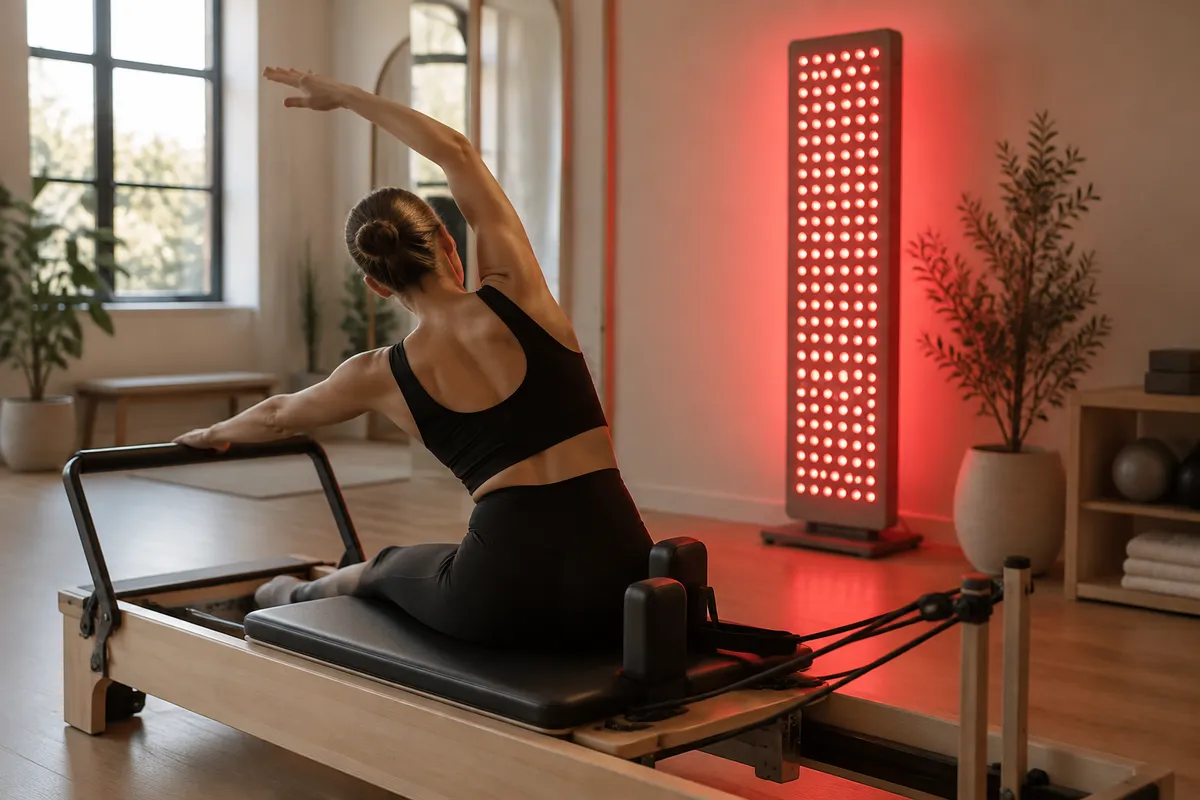
Recovery used to be the thing you did after the workout, if you remembered. Now it's being built into the studio itself. In Oxford, STRONG Pilates and the wellness centre Khanom's have partnered with wellness technology brand BON CHARGE to bring red light therapy into Pilates, yoga and dedicated recovery spaces, per Oxfordmail.
Here's what that tells you about where fitness is heading, and how to decide whether recovery tech belongs in your own routine.
What the Oxford partnership actually covers
The reported details are fairly simple. The two Oxford businesses are working with BON CHARGE to integrate red light therapy across three settings: Pilates, yoga and dedicated recovery spaces. Oxfordmail frames the move as recovery technology shifting from elite wellness circles into everyday fitness routines.
The coverage doesn't spell out session lengths, pricing or specific health outcomes, so treat any claim beyond the basic partnership with caution. If you're local and curious, ask the studios directly how sessions work and what they cost.
Why recovery is now part of the workout
The broader point is that people are thinking beyond the workout itself. According to the report, consumers are increasingly looking toward longevity, performance and wellbeing, and recovery is a bigger part of that conversation.
That shift makes sense for a practice like Pilates. It's low-impact and built around control, so it already attracts people who think about how their body feels the next day, not just how hard they trained. Pairing it with a dedicated recovery space turns a single class into a train, recover, reset session.
Red light therapy: what to know as a beginner
Red light therapy is still relatively new to most UK adults, per the report, though adoption is reportedly rising quickly. That combination, unfamiliar but growing, is exactly when it pays to be a careful consumer.
A few practical questions to ask before you book anything:
- Who runs it? Ask what device is used and whether staff are trained to explain it.
- What are you hoping for? Be specific, whether that's winding down after a class or adding structure to a recovery day. Vague goals make it hard to judge whether anything is working.
- What does it cost per session? Compare that with other recovery habits you already have.
- Do you have a health condition or take medication? If so, check with your GP before trying a new therapy.
I'd also be wary of treating any device as a shortcut. The research behind recovery tech varies, and nothing in this report suggests it replaces the basics.
The recovery basics that cost nothing extra
This is a food and nutrition site, so here's the part of recovery you control every day. Whatever studio add-ons you try, the fundamentals sit on your plate and in your schedule:
- Eat after you train. A meal or snack with protein and carbohydrate within a couple of hours is a simple habit. Think eggs on toast, yoghurt with fruit and oats, or a chicken and rice bowl.
- Drink water through the day. Don't wait until you're parched after class.
- Build colour into meals. Vegetables and fruit give you variety of nutrients without any fuss.
- Protect your sleep. It's the recovery tool no studio can sell you.
Treat a red light session as an optional layer on top of these, not a substitute for them.
Is this the next boutique fitness upgrade?
It's a fair question, and here's my take rather than anything reported: studios have strong reasons to add recovery offerings. They give members another reason to stay, and they differentiate one boutique from the next. Whether that becomes standard will depend on whether members feel the value and whether prices stay reasonable.
For you, the useful test is plain. After a few sessions, do you feel better, sleep better or stick to your routine more consistently? If yes, it's earning its place. If you can't tell, your money may do more good elsewhere.
The takeaway
Before you add any recovery extra, audit the basics first: a protein-rich meal after training, steady hydration and a regular bedtime. Then, if red light therapy at a studio like those in Oxford appeals, try it as a deliberate experiment with a clear question, and keep it only if the answer is yes.