Cold mornings, crowded indoor spaces and busy schedules can make winter feel like prime time for sniffles, sore throats and stomach bugs. While no single food can guarantee immunity, the right nutrition habits can help your body respond better when seasonal germs circulate. A winter wellness plan should focus on colourful whole foods, enough protein, gut-friendly meals, steady hydration and simple daily routines that support energy and recovery.
Why nutrition matters during cold and flu season
Your immune system works around the clock. It needs a steady supply of nutrients to build protective cells, repair tissue and manage inflammation. When your diet becomes low in fresh produce, protein or fluids, you may feel more run down. That can make winter fatigue harder to shake.
Good nutrition is not a quick fix after symptoms start. It is most powerful when practiced consistently. The aim is to create a strong baseline before winter bugs arrive. Small choices at breakfast, lunch and dinner can add up quickly.
Fill half your plate with colourful plants
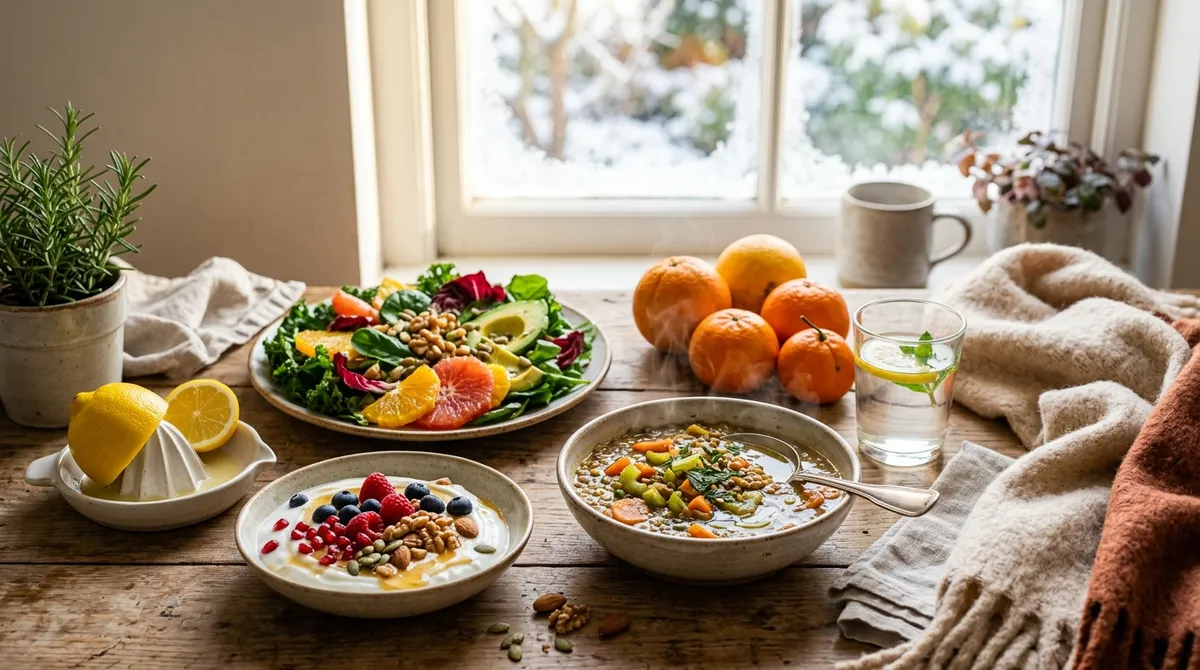
Fruit and vegetables provide antioxidants, fibre and essential vitamins. These nutrients help protect cells and support the normal function of the immune system. A colourful plate also makes meals more satisfying, which can reduce reliance on ultra-processed snacks.
Vitamin C is often linked with winter health. Citrus fruit, kiwi fruit, strawberries, capsicum, broccoli and leafy greens all contain it. Rather than taking large doses only when you feel unwell, include vitamin C rich foods every day.
Orange vegetables deserve attention too. Pumpkin, carrot and sweet potato provide beta-carotene, which the body can convert into vitamin A. This nutrient helps maintain the healthy lining of the nose, throat and digestive tract. These linings are part of your first line of defence.
Prioritise protein at each meal
Protein is essential for immune cells, muscle maintenance and recovery. Many people eat enough at dinner but fall short earlier in the day. Spreading protein across meals can support fullness and stable energy.
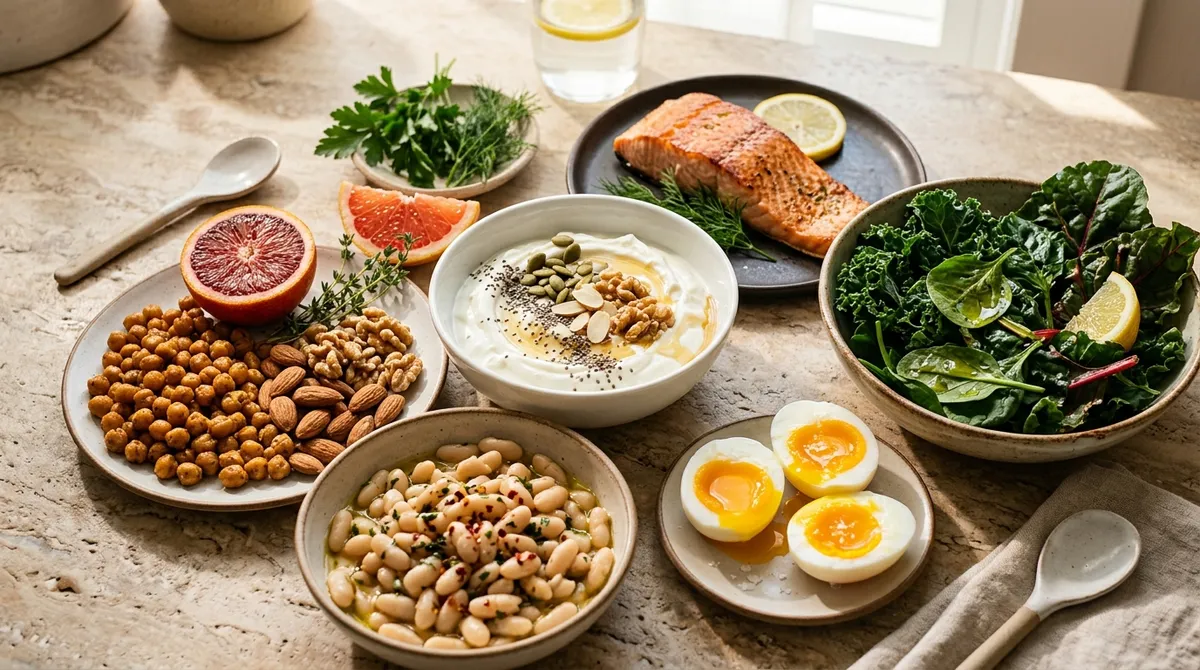
Useful options include eggs, fish, chicken, lean meat, tofu, tempeh, Greek yoghurt, legumes, lentils, nuts and seeds. A simple winter breakfast could be eggs with spinach, yoghurt with berries, or porridge topped with nuts and milk. For lunch, try bean soup, tuna salad, leftover chicken, or tofu with rice and vegetables.
Support gut health with fibre and fermented foods
A large part of immune activity is connected to the gut. This is why gut health can influence how the body handles seasonal challenges. Fibre feeds beneficial gut bacteria, while fermented foods can add helpful microbes to the diet.
High fibre choices include oats, barley, lentils, chickpeas, beans, vegetables, fruit, wholegrain bread and brown rice. Increase fibre gradually if your intake is low. Drink enough water at the same time to help digestion stay comfortable.
Fermented foods can also be useful. Yoghurt with live cultures, kefir, sauerkraut, kimchi, miso and tempeh are popular examples. Choose products with less added sugar where possible. If fermented foods are new to you, begin with small portions.
Do not forget vitamin D in winter
Vitamin D plays a role in immune function, bone health and muscle strength. In winter, many people spend less time outdoors. Shorter days and extra layers of clothing can reduce sun exposure, which may lower vitamin D levels.
Food sources include oily fish, eggs and fortified products. However, diet alone may not be enough for everyone. People who cover their skin, work indoors, have darker skin, or rarely spend time outside may need to discuss vitamin D testing or supplements with a health professional.
Add zinc-rich foods for immune support
Zinc helps the body produce and activate immune cells. It also supports wound healing and normal growth. You can find zinc in seafood, lean meat, poultry, eggs, dairy foods, legumes, nuts, seeds and wholegrains.
Oysters are especially rich in zinc, but they are not the only option. Pumpkin seeds, lentils, beef, yoghurt and chickpeas can all contribute. Combine plant-based zinc sources with vitamin C rich foods to improve overall meal quality.
Use warming meals to boost nutrient intake
Winter meals do not need to be complicated. Soups, stews, curries and tray bakes are excellent ways to combine protein, vegetables, herbs and wholegrains. They are also easy to prepare in batches, which helps when busy weeks reduce motivation.
A nourishing soup might include chicken, lentils, carrots, celery, garlic, onion and leafy greens. Serve it with wholegrain toast or brown rice for staying power. For a plant-based version, use chickpeas, beans or tofu with herbs and spices.
Garlic, ginger, turmeric and chilli can make winter dishes more appealing. They also add flavour without relying heavily on salt. While these ingredients are not magic cures, they can encourage people to eat more vegetables and homemade meals.
Stay hydrated even when you feel less thirsty
Hydration often drops during cold weather. Heated indoor air, extra coffee and reduced thirst can all contribute. Fluids help manage body temperature, support digestion and keep mucous membranes moist.
Water is the best everyday option, but warm drinks can help too. Herbal tea, broth and warm lemon water may feel soothing. If you are unwell with fever, vomiting or diarrhoea, fluid needs can rise. Seek medical advice if dehydration signs appear, especially in children or older adults.
Be careful with alcohol and excess sugar
Comfort foods can be part of winter, but balance matters. Diets high in sugary drinks, sweets and heavily processed foods can crowd out key nutrients. Alcohol can also affect sleep quality and recovery.
You do not need to be perfect. Aim for mostly whole foods and keep treats intentional. Pair sweet foods with nourishing meals rather than using them as your main energy source. Better routines are easier to maintain than strict food rules.
Plan ahead before symptoms appear
When illness hits, cooking from scratch can feel impossible. A stocked kitchen makes healthy choices easier. Keep frozen vegetables, canned legumes, eggs, oats, rice, pasta, tuna, yoghurt and soup ingredients on hand.
Batch cooking can also help. Freeze portions of soup, bolognese, dhal, curry or vegetable-packed casseroles. This gives you quick meals when energy is low. It can also reduce takeaway spending during winter.
Nutrition works best with healthy lifestyle habits
Food is important, but it is only one part of winter immune health. Sleep, movement, hand hygiene and stress management all matter. A nutrient-rich diet cannot cancel out ongoing exhaustion.
Try to build a consistent sleep schedule where possible. Gentle exercise, such as walking, can support circulation and mood. Washing hands regularly and staying home when sick helps protect others. These habits work together with good nutrition.
When to seek professional advice
Most winter bugs pass with rest, fluids and supportive care. However, some symptoms need medical attention. Seek help for breathing difficulty, chest pain, severe dehydration, persistent fever, worsening symptoms, or concerns about babies, older adults or people with chronic illness.
If you have ongoing low immunity, frequent infections, digestive issues or restrictive eating patterns, consider speaking with a doctor or accredited dietitian. Personalised guidance can identify nutrient gaps and suitable supplements.
Conclusion
The best nutrition tips for fighting winter bugs are simple and practical. Eat more colourful plants, include protein at every meal, support gut health, watch vitamin D, add zinc-rich foods and stay hydrated. These habits will not make you invincible, but they can help your body stay better prepared through cold and flu season.