The microwave is one of the most useful tools in a modern kitchen, yet it still carries an unfair reputation. Many people wonder whether microwave cooking is healthy, whether it damages nutrients, or whether reheating food this way is safe. The short answer is reassuring: when used correctly, a microwave can be a healthy, efficient, and nutrient-friendly way to cook food.
How Microwave Cooking Actually Works
A microwave oven heats food using electromagnetic waves. These waves move through the food and cause water molecules to vibrate quickly. That movement creates heat, which cooks or warms the food from within and around the surface.
This process does not make food radioactive. The microwave energy stops when the appliance turns off. Food does not store radiation, and it does not become unsafe simply because it was cooked in a microwave.
Microwave ovens are designed to keep energy contained inside the appliance. The metal screen on the door helps block the waves while still letting you see the food. As long as the microwave is in good condition and the door seals properly, normal household use is considered safe.
Does the Microwave Destroy Nutrients?
All cooking methods change food in some way. Heat, water, and cooking time can affect vitamins, texture, color, and flavor. The important question is not whether nutrients change, but how much they change compared with other cooking methods.
Microwave cooking can actually help preserve nutrients. It usually requires less water and shorter cooking times than boiling or long stovetop cooking. This matters because some nutrients, especially vitamin C and several B vitamins, are sensitive to heat and water.
For example, vegetables boiled in a large pot may lose nutrients into the cooking water. If that water is discarded, some nutritional value goes with it. Microwaving vegetables with a small amount of water can reduce that loss while keeping them bright and tender.
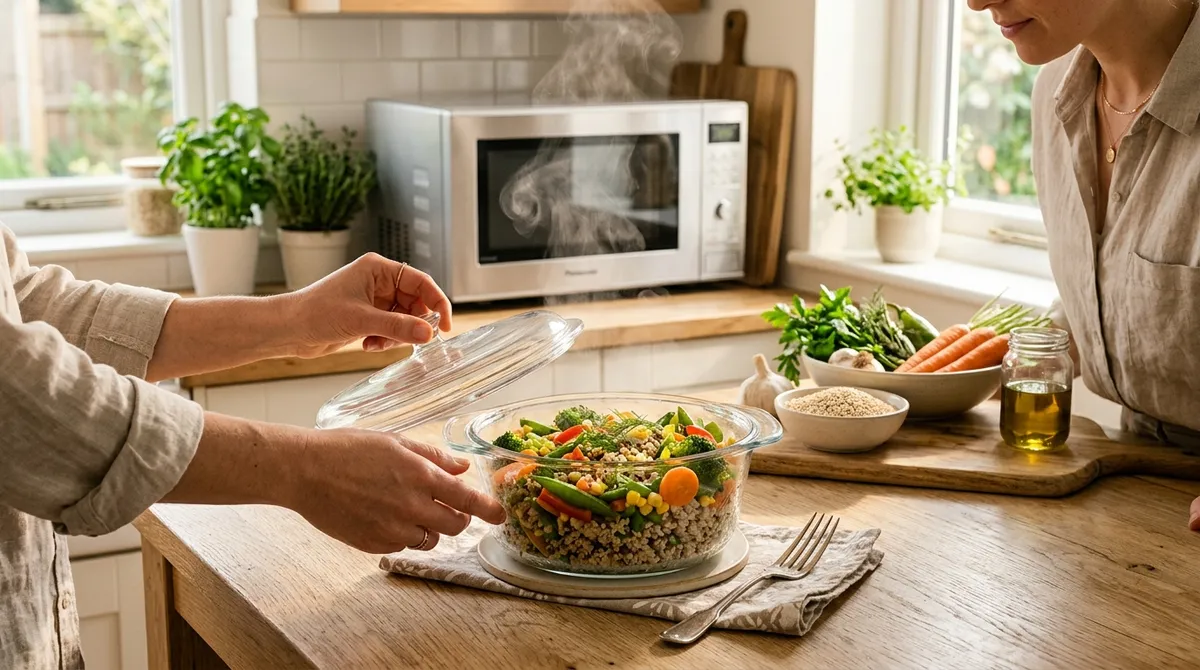
Steaming in the microwave is often one of the best methods for quick vegetable preparation. Broccoli, carrots, zucchini, green beans, spinach, and cauliflower all cook well this way. The key is to avoid overcooking them until they become mushy.
Microwave Safety Starts With the Right Container
The biggest health concern with microwave use is often not the appliance itself. It is the container used inside it. Not every plate, bowl, wrap, or storage container belongs in a microwave.
Use containers clearly marked as microwave-safe. Glass, ceramic, and certain microwave-safe plastics are common options. If a container is cracked, warped, stained, or very old, it is better to replace it.
Avoid microwaving food in containers not designed for heat. This includes many takeout boxes, thin plastic tubs, foam containers, and some disposable packaging. Heat can cause certain materials to melt, break down, or transfer unwanted substances into food.
Metal should generally stay out of the microwave. Metal pans, aluminum foil, twist ties, and utensils can cause sparks or damage the appliance. Some newer microwave accessories contain metal by design, but those should only be used if the manufacturer says they are safe.
How to Reheat Food Safely
Microwaves can heat unevenly. One area may become very hot while another stays cool. This is why stirring, rotating, and resting food are important steps, especially for leftovers.
When reheating cooked food, spread it in a shallow layer when possible. Add a splash of water, broth, or sauce if the food is dry. Cover it with a microwave-safe lid or vented cover to trap steam and reduce splatter.
Pause halfway through heating to stir the food. This helps move heat throughout the dish. After microwaving, let the food stand for a minute or two. The resting time allows heat to continue spreading evenly.
For food safety, leftovers should reach 165°F throughout before eating. This is especially important for rice, poultry, meat, seafood, casseroles, and dishes with sauces. A food thermometer gives the most reliable answer.
Best Foods to Cook in the Microwave
The microwave is not only for reheating coffee or yesterday's dinner. It can cook many healthy foods quickly, especially when time is limited.
Oatmeal is one of the easiest options. Combine oats with water or milk, then microwave in short intervals. Add fruit, nuts, cinnamon, or seeds for extra fiber and flavor.
Eggs can also be cooked in the microwave, but they need care. Do not microwave eggs in the shell, because pressure can build and make them burst. Instead, whisk eggs in a microwave-safe bowl, cook briefly, stir, and continue in short bursts until set.
Potatoes and sweet potatoes are excellent microwave foods. Pierce the skin with a fork before cooking so steam can escape. A medium potato can become soft in minutes, making it a fast base for beans, vegetables, salsa, yogurt, or lean protein.
Frozen vegetables are another smart choice. They are often picked and frozen at peak freshness. Microwaving them with a small amount of water makes a quick side dish without the need for extra oil.
Foods That Need Extra Caution
Some foods can behave unpredictably in a microwave. Whole eggs, sealed containers, and tightly covered jars can explode because steam has nowhere to go. Always vent lids and packaging before heating.
Hot peppers can release strong vapors when heated. These vapors may irritate the eyes or throat when the door opens. Use caution and ventilation when microwaving spicy foods.
Grapes and some foods with concentrated minerals may spark in certain conditions. While this is not common in everyday cooking, it is a good reminder to use the microwave as intended.
Liquids also deserve attention. Water can become superheated, meaning it gets hotter than its boiling point without bubbling normally. When disturbed, it may suddenly boil over. To reduce risk, heat liquids in short intervals and let them sit briefly before handling.
Cooking Tips for Better Flavor and Texture
Healthy microwave cooking is not only about safety. Technique can greatly improve taste and texture. Start by cutting food into similar-sized pieces. Even pieces cook more evenly and reduce the chance of cold centers.
Arrange thicker pieces toward the outside of the dish. The edges often receive more energy than the center. For items like chicken pieces or chopped vegetables, this simple step helps improve consistency.
Use a cover, but leave room for steam to escape. A vented lid keeps moisture in while preventing pressure buildup. It also keeps the microwave cleaner, which helps the appliance work better over time.
Season food before and after cooking. Garlic, onion, herbs, citrus juice, vinegar, pepper, and spices can make microwave meals taste fresh. A small amount of olive oil or avocado may also improve flavor and help absorb fat-soluble vitamins.
Avoid cooking everything on the highest setting. Lower power can be useful for delicate foods, melting chocolate, softening butter, or reheating dense dishes. Slower heating often gives better results.
Microwave Cooking and a Balanced Diet
A microwave does not make a meal healthy or unhealthy by itself. The quality of the ingredients matters most. A bowl of vegetables, beans, and brown rice can be nourishing. A highly processed frozen meal may be less balanced, even if cooked perfectly.
When choosing microwave meals, read labels. Look for options with vegetables, whole grains, lean proteins, and moderate sodium. Many packaged meals are high in salt, added sugars, or saturated fat. Pairing them with a salad or extra vegetables can improve the meal.
For busy families, students, and professionals, the microwave can support better eating habits. It makes it easier to reheat homemade food, cook quick vegetables, and prepare simple breakfasts. Convenience can help people rely less on fast food.
Keeping Your Microwave Clean and Efficient
A clean microwave is safer and more pleasant to use. Food splatters can burn, smell, and affect heating. Wipe spills as soon as the appliance cools.
For stubborn stains, heat a bowl of water with lemon slices or a splash of vinegar for a few minutes. Let the steam sit inside, then wipe the walls with a soft cloth. Avoid harsh scrubbers that may damage the interior.
Check the door, seal, and turntable regularly. If the door does not close correctly or the appliance is damaged, stop using it until it is repaired or replaced.
Final Thoughts
Microwave cooking can be a safe and healthy choice when used properly. It does not make food radioactive, and it can help preserve nutrients by reducing cooking time and water use. The best results come from using microwave-safe containers, stirring food, covering dishes correctly, and heating leftovers to a safe temperature.
Like any kitchen tool, the microwave works best with good ingredients and smart habits. Use it to steam vegetables, warm homemade meals, cook quick breakfasts, and simplify busy days. With a few practical techniques, it can become one of the healthiest appliances in your kitchen.